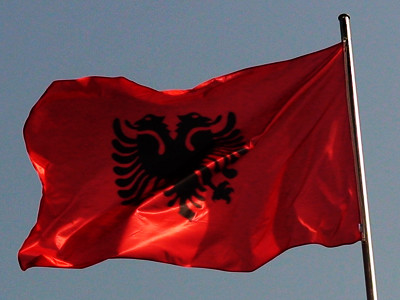
The first of the Balkan Wars , in 1912, gave the Albanians an opportunity to proclaim their independence. During the Second Balkan War (1913), Albania was occupied by the Serbs. A conference of Great Power ambassadors defined the country's borders in 1913 and destroyed the dream of a Greater Albania by ceding large tracts to Montenegro, Serbia, and Greece. The ambassadors at the conference placed Albania under their guarantee and named William, prince of Wied , as its ruler. Within a year he had fled, as World War I erupted and Albania became a battleground for contending Serb, Montenegrin, Greek, Italian, Bulgarian, and Austrian forces. Secret treaties drafted during the war called for Albania's dismemberment, but Albanian resistance and the principle of self-determination as promoted by U.S. President Woodrow Wilson helped to restore an independent Albania. In 1920 the Congress of Lushnje reasserted Albanian independence. The early postwar years witnessed a struggle between conservative landlords led by Ahmed Zogu and Western-influenced liberals under Bishop Fan S. Noli. After Noli's forces seized power in 1924, Zogu fled to Yugoslavia, where he secured foreign support for an army to invade Albania. In 1925, Albania was proclaimed a republic under his presidency; in 1928 he became King Zog . Italy, whose political and economic influence in Albania had steadily increased, invaded the country in 1939, forcing Zog into exile and bringing Albania under Italian hegemony. The Albanian puppet government declared war on the Allies in 1940; but resistance groups, notably the extreme leftist partisans under Enver Hoxha , waged guerrilla warfare against the occupying Axis armies. In 1943-44, a civil war also raged between the partisans and non-Communist forces within Albania. Albania was liberated from the Axis invaders without the aid of the Red Army or of direct Soviet military assistance, and received most of its war matériel from the Anglo-American command in Italy.
 ruler. Within a year he had fled, as World War I erupted and Albania became a battleground for contending Serb, Montenegrin, Greek, Italian, Bulgarian, and Austrian forces. Secret treaties drafted during the war called for Albania's dismemberment, but Albanian resistance and the principle of self-determination as promoted by U.S. President Woodrow Wilson helped to restore an independent Albania. In 1920 the Congress of Lushnje reasserted Albanian independence. The early postwar years witnessed a struggle between conservative landlords led by Ahmed Zogu and Western-influenced liberals under Bishop Fan S. Noli. After Noli's forces seized power in 1924, Zogu fled to Yugoslavia, where he secured foreign support for an army to invade Albania. In 1925, Albania was proclaimed a republic under his presidency; in 1928 he became King Zog . Italy, whose political and economic influence in Albania had steadily increased, invaded the country in 1939, forcing Zog into exile and bringing Albania under Italian hegemony. The Albanian puppet government declared war on the Allies in 1940; but resistance groups, notably the extreme leftist partisans under Enver Hoxha , waged guerrilla warfare against the occupying Axis armies. In 1943-44, a civil war also raged between the partisans and non-Communist forces within Albania. Albania was liberated from the Axis invaders without the aid of the Red Army or of direct Soviet military assistance, and received most of its war matériel from the Anglo-American command in Italy.